


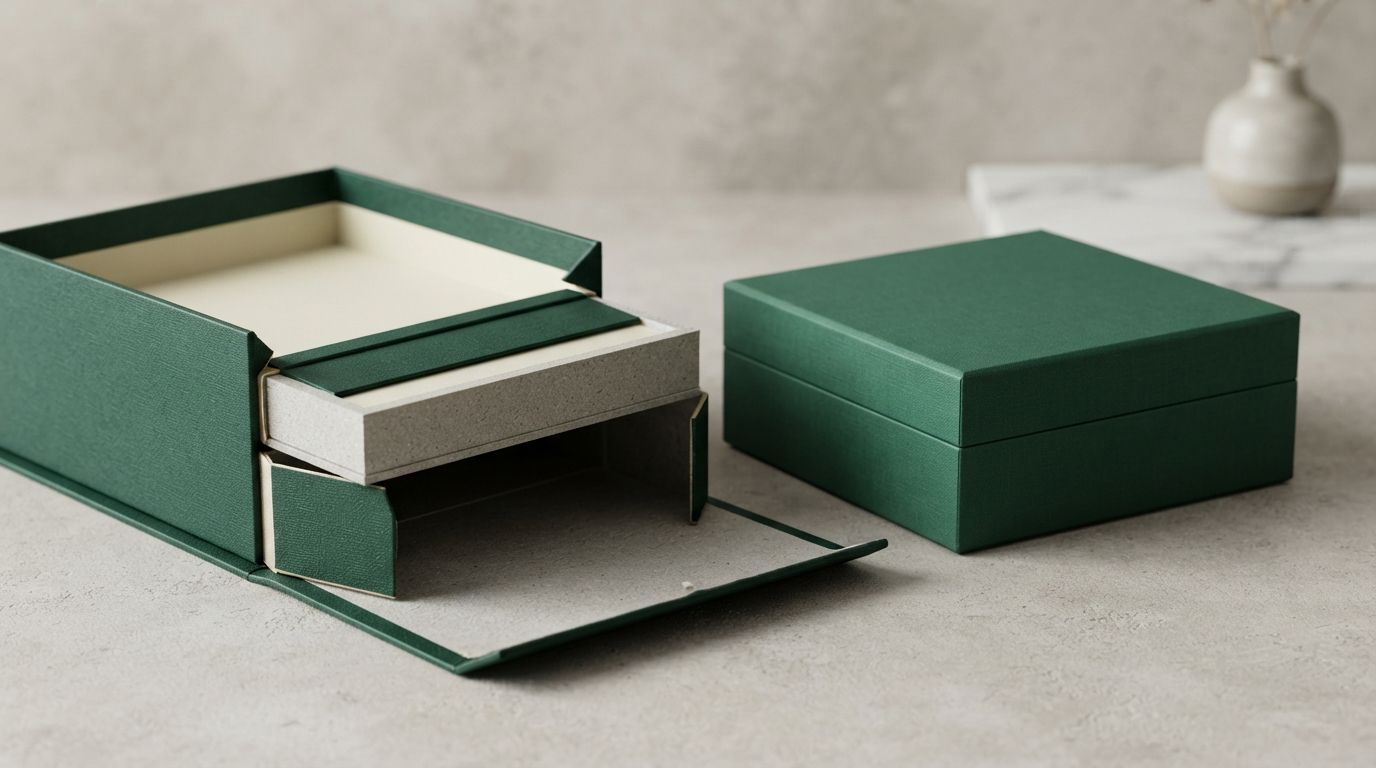
People notice the finish first. The printed graphics, the soft-touch lid, the way a box feels heavier than expected the moment it’s picked up. What they don’t see is the material doing the actual work underneath all of that. In most rigid packaging, that’s greyboard.
Greyboard is what gives a rigid box its strength. Folding cartons use thin paperboard that folds flat and stays that way until assembly. Rigid boxes use thick greyboard that holds its shape permanently, and that one difference is really where everything else about rigid packaging starts.
For packaging cosmetics, jewelry, electronics, gourmet food, or luxury gifts, understanding what greyboard actually is helps make better calls when it’s time to choose custom packaging.
What greyboard actually is
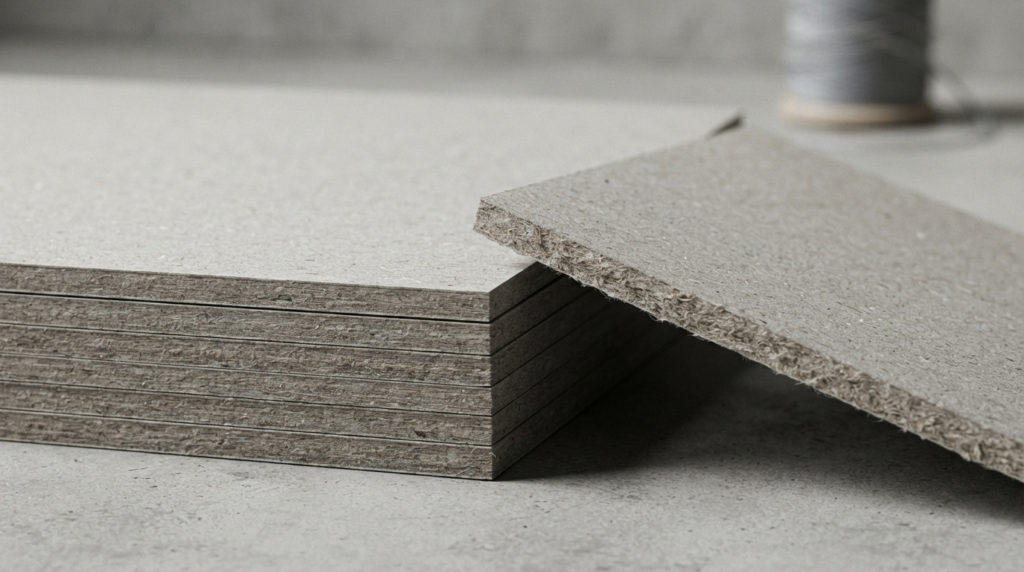
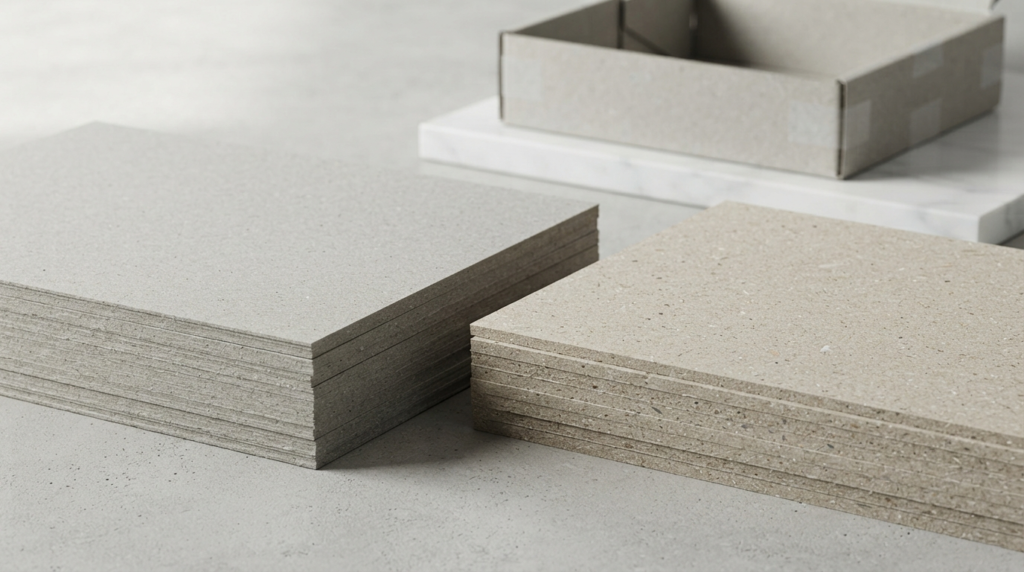
Greyboard is a thick paperboard made from compressed recycled paper fibers. The gray color comes straight from the recycled material itself, not a dye or coating applied afterward.
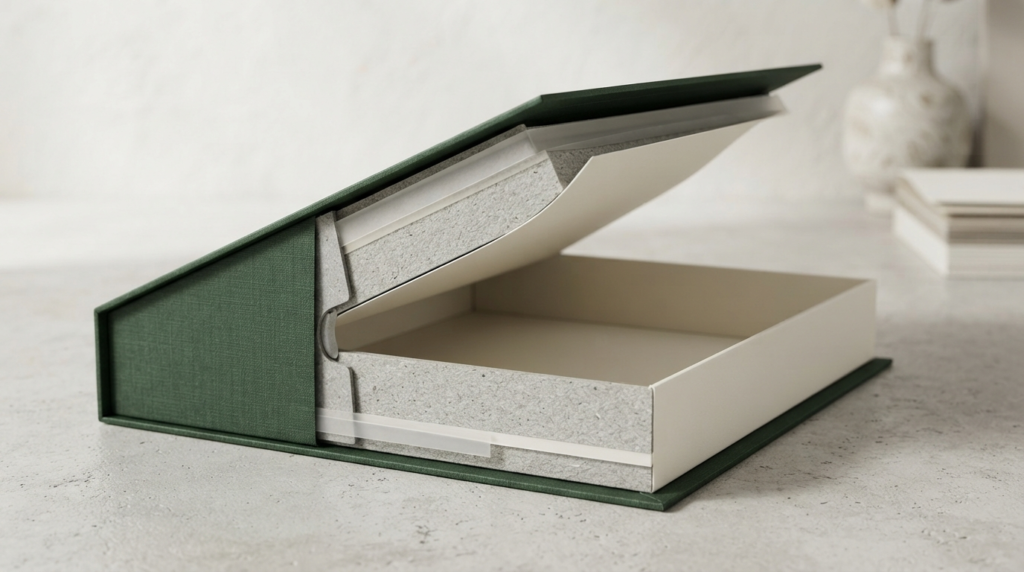
It’s rarely visible once a box is finished, since it sits underneath printed paper, textured paper, kraft, or whatever wrap the design calls for. That layered build, structural core plus decorative surface, is what lets a rigid box combine real strength with pretty much unlimited design options on top.
Why it ends up in rigid boxes specifically
Rigid packaging needs to protect a product and still look premium, and greyboard is what makes both of those possible at once. It resists bending, holds its shape through repeated handling, and gives a more substantial feel than lighter materials manage.
That combination, strength, a stable base for wrapping, consistent shape, compatibility with pretty much any box style, is why greyboard has become the default core material across most rigid packaging.
How a sheet of greyboard becomes an actual box
Greyboard on its own isn’t the finished product, it’s the framework everything else gets built around. Sheets get cut to size, assembled into the box structure, then wrapped in decorative paper. Interior lining goes on, inserts get added if the project needs them, and finishing techniques close things out. What ends up in someone’s hands is greyboard’s structural strength hidden behind whatever visual style the brand’s going for.
What actually makes greyboard useful here
It holds its shape far better than standard carton material, so once it’s assembled into a box, it doesn’t collapse or dent under normal handling. The compressed fibers give it enough density to support heavier products too, something thinner paperboard just can’t manage as well.
The natural gray surface isn’t meant to be seen, but it’s an excellent base for whatever goes over it, matte, gloss, textured paper, metallic finishes, soft-touch coatings, printed artwork, all without weakening the structure underneath.
It’s also flexible enough to work across pretty much every rigid box style out there, magnetic closure, drawer, two-piece, book-style, shoulder neck, hinged lid, collapsible. Since the material itself is structurally stable, designers get more room to actually experiment with the format.
Thickness, and why it varies
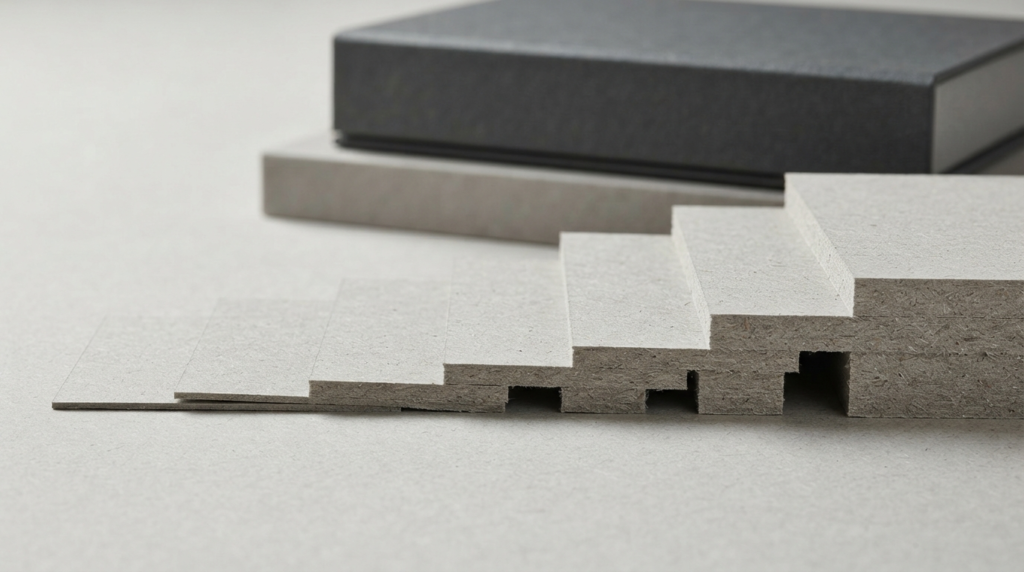
Greyboard comes in different thicknesses, and picking the right one depends on the product’s weight, the box dimensions, the style, what kind of insert is going in, and how it’ll ship. Lighter products can usually get away with a thinner board. Bigger or heavier items need something sturdier. The instinct to just grab the thickest option available isn’t usually the right call, it’s more about matching the thickness to what the box actually needs to do.
Where greyboard shows up
Jewelry leans on it constantly, rings, necklaces, bracelets, watches, usually paired with foam or fabric-covered inserts. Cosmetics and skincare brands use it for the same reason, durability plus a presentation that feels worth the price point. Electronics need it to protect delicate components while keeping everything organized inside. Corporate gifting relies on it for a professional look on executive gifts and branded kits. And gourmet food, chocolates, tea, coffee, seasonal assortments, use it for the same combination of protection and presentation.
Greyboard vs. standard folding carton board
| Greyboard | Folding Carton Board | |
| Structure | Thick, rigid | Thin, foldable |
| Strength | High | Moderate |
| Shape retention | Holds its form | Can flex or collapse |
| Presentation | Premium | Standard retail |
| Typical use | Luxury rigid boxes | Everyday cartons |
That table is really the whole reason high-end packaging defaults to greyboard while everyday retail sticks with folding cartons. Different jobs, different material.
Greyboard vs. chipboard
The two terms get used a lot interchangeably, and there’s real overlap, but they’re not quite the same thing. Greyboard specifically comes from recycled fibers and is known by that natural gray tone, chosen mainly for its density and how well it holds shape as a structural core. Chipboard covers a wider range; some grades use recycled fiber, others use virgin fiber for a smoother or brighter surface depending on what the application needs.
Both get used in packaging, but greyboard tends to be the pick specifically when the goal is a strong, durable rigid box rather than something built for another purpose. Which one actually fits depends on the design and what the product needs, not one being flatly better than the other.
What makes greyboard worth choosing
Beyond the strength itself, greyboard pairs with a wide range of wrapping papers, printing methods, and finishing techniques, so it adapts to pretty much any branding direction, minimalist or heavily decorated. It works with foam, paperboard, molded pulp, corrugated, velvet, or satin inserts depending on what’s being protected, and it shows up across cosmetics, jewelry, electronics, fashion, gourmet food, and corporate gifting without much variation in performance.
What actually matters when choosing it for a project
Rather than fixating on thickness alone, it helps to think through the product’s weight and dimensions, the box style, how it’ll be stored and shipped, what inserts it needs, and what finishing the design calls for. How heavy is the product? Is it one item or several? Is this going on a retail shelf or straight to a customer as a gift? Working through those questions early is what actually leads to the right board choice, not picking the thickest sheet available and hoping it works.
Is greyboard the more sustainable option?
Since it’s commonly made from recycled paper fibers, greyboard is often a reasonable choice for businesses trying to lean into paper-based materials. Recycled greyboard, recyclable wraps, paperboard or molded pulp inserts, and water-based inks can all factor into a more environmentally conscious build. That said, the full picture depends on every part of the box, coatings, laminations, adhesives, and finishes all affect the actual footprint, not just the core board itself.
Where this lands
Greyboard is the part of rigid packaging nobody really notices, right up until the box in someone’s hands feels flimsy without it. Customers see the artwork and the finish first, but the durability underneath starts with the board, not the wrap. Getting that choice right, matching thickness and grade to what the product actually needs, is one of the more overlooked steps in building packaging that holds up past the first impression.
At Rigid Packaging Boxes (RPB), every custom rigid box gets built around the product’s actual structural and branding requirements, greyboard included. If you’re working through what your packaging actually needs, our rigid packaging range is a good place to see the styles and customization options available.
Common questions
What’s greyboard made from? Compressed recycled paper fibers, formed into dense, rigid sheets used as the structural core of most rigid packaging.
Is it the same as cardboard?
Not exactly. Greyboard is a specific type of thick paperboard built for structural strength, while cardboard is a broader term covering several different paper-based materials.
Why does it end up in rigid boxes specifically?
It gives the strength and shape retention rigid boxes need, while still supporting decorative wraps, inserts, and finishes on top.
Can it be customized?
Yes, converted into pretty much any box style and wrapped with different papers, printing, and finishing depending on the brand.
What products commonly use it?
Jewelry, cosmetics, electronics, gourmet foods, fashion accessories, corporate gifts, and luxury retail packaging generally.
Does it support premium finishes?
Yes, foil stamping, embossing, debossing, Spot UV, and various laminate finishes all work well on a greyboard base.
Good for custom inserts?
Yes, foam, paperboard, molded pulp, corrugated, velvet, or satin, depending on what’s being protected.
Does it work across different box styles?
Yes, magnetic closure, drawer, two-piece, book-style, hinged lid, shoulder neck, and collapsible rigid boxes all commonly use it.